
- Home
- /
-
Jackson Miracle Stories

Jackson Miracle Stories
Your dollars at work.
Richard Vargas
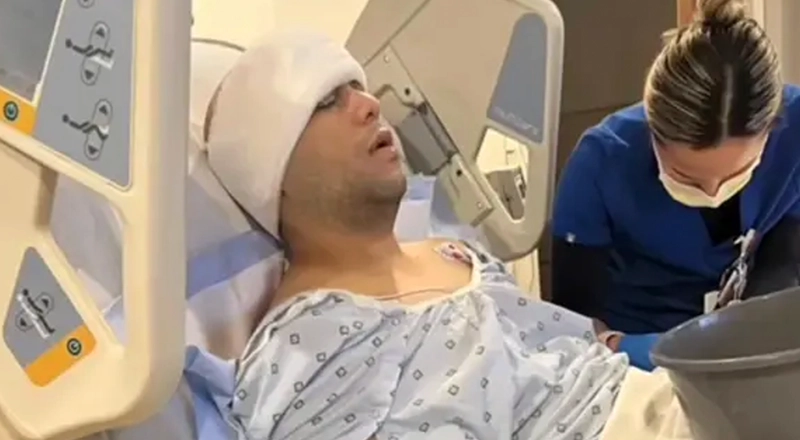
Richard Vargas, 35, is a coach at CKO Kickboxing River Landing, where he teaches a special monthly class in partnership with Christine E. Lynn Rehabilitation Center for The Miami Project to Cure Paralysis at UHealth/Jackson Memorial. The class, Special and Strong, is open to rehab patients with traumatic brain injuries and other neurological or physical disabilities. But what makes the partnership truly unique is that Vargas isn’t just a coach, he’s a former patient at Jackson Memorial Hospital.
“It was just a regular day,” Vargas recalled. “I went to the bathroom, and suddenly, I felt a very sharp pain in my head. It lasted for about 20 seconds; the longest 20 seconds of my life.”
The next thing he remembers is waking up in a hospital, blind and unable to move.
“The only thing I remember hearing was, ‘He has a brain bleed,’ and I started panicking,” he said. “I panic easily, and I just remember feeling so scared.”
Doctors at Jackson Memorial diagnosed him with a severe brain bleed. A 10-hour surgery saved Vargas’s life, but his recovery was just beginning.
“When I woke up, I couldn’t walk, I couldn’t talk, I couldn’t do anything,” he said. “But I’m very grateful for every milestone and every bump in the road. That’s what made me who I am today.”
Vargas began rehabilitation at Lynn Rehabilitation Center, working closely with physical, occupational, and speech therapists. At first, he struggled with the emotional toll of recovery.
“I was bitter. I hated my life,” he said. “I hated waking up in the morning because I only felt pain. I couldn’t walk, I couldn’t do anything. The therapists would walk in all sweet, and I’d give them attitude. But they kept showing up. They got me out of bed. They helped me walk again.”
Through a lot of hard work and rehabilitation, Vargas was discharged from Lynn Rehabilitation Center. Once out of the hospital, he continued to push himself through recovery.
Tangela McBride
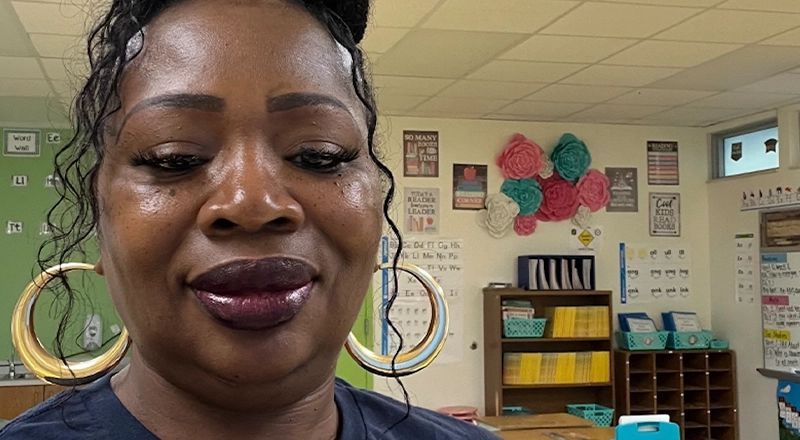
Tangela McBride, 54, has worked as an educator for many years.
“I fell in love with working with kids after being a teacher’s assistant,” McBride said. “In 2016, I started teaching full time. I love what I do.”
She never thought her life would be in jeopardy when she suffered a heart attack in the middle of her classroom.
On September 13, 2024, McBride was teaching when she collapsed on the floor. Fortunately, the school’s music teacher went looking for her. When she knocked on McBride’s classroom door, a 5-year-old student opened it, and her colleague saw her unresponsive.
The music teacher immediately ran to check McBride’s pulse, and called for help. Within minutes, the school’s police officer performed CPR and shocked McBride with an automated external defibrillator – an action that potentially saved her life.
When emergency medical services arrived, they continued treatment and rushed her to Ryder Trauma Center at Jackson South.
“The patient came in intubated and sedated – we kept her intubated because we wanted to run some scans to pinpoint exactly what caused the heart attack,” said Andrew Pastewski, MD, medical director of Jackson South’s intensive care unit (ICU). “After several tests, the patient started to have purposeful movements, which is a sign the brain didn’t go without oxygen.”
In the ICU, a team led by Dr. Pastewski and Bashar Obeidou, MD, an interventional cardiologist at Jackson South, initiated a cardiac work-up, which showed a completely normal heart function.
Within 24 hours, McBride’s condition improved. To help prevent future heart attacks, a team led by Ivan Mendoza, MD, chief of cardiology at Jackson West, implanted a defibrillator – a device that applies an electric charge or current to the heart to restore a normal heartbeat.
Dylan Smith
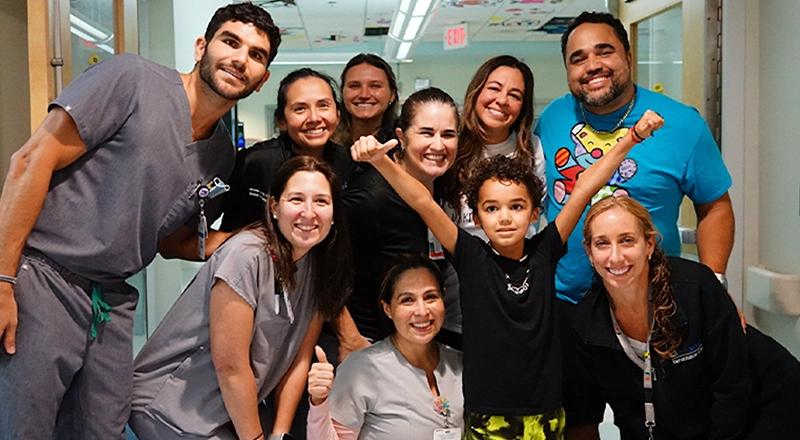
June 22, 2025, was a normal summer Sunday for the Smith family. Brandon Smith was barbecuing, Tiffany Smith was back-to-school shopping on her phone, and the kids, 8-year-old Dylan and 13-year-old Olivia, were playing in the pool.
“The kids were competing with who could go back and forth the longest while holding their breath in the pool,” Tiffany said. “Dylan, being fearless and resilient, had to outdo his sister.”
The day quickly turned into a nightmare when Tiffany realized the pool had fallen silent.
“He tried to hold his breath a little too long, and that’s what caused him to pass out. I was the one who found him in the pool,” she said. “And I found him because it was too quiet. It’s never quiet in my house. It wasn’t one of those scenes out of a movie where somebody is splashing around, asking for help.”
Just minutes earlier, Brandon had gone inside to change. When he heard his wife scream, he ran outside to see Tiffany holding an unconscious Dylan.
“Before I did anything, I just said a prayer. I laid him flat and started CPR. Tiffany called 911,” he said.
Both Brandon and Tiffany are CPR-certified and knew exactly what to do. Meanwhile, Olivia ran to nearby houses for help.
Luckily, one of the neighbors remembered that a few doors down lived someone who works in the medical field.
“The adrenaline kicked in,” said Lissette Medina, a physician assistant for Shriners Children’s Orthopedic Center at UHealth Jackson Children’s Care. “It was the most scared I’ve ever been in the 16 years of my career.”
Medina rushed over, identified herself, and took over CPR, continuing chest compressions for more than seven minutes until paramedics arrived.
“The clinical part of my brain was what kept acting,” she said. “But my biggest fear was knowing Dylan’s life was literally in my hands. Something came over me and just told me to act.”
Paramedics arrived and inserted a breathing tube before taking Dylan to Jackson South Medical Center, where doctors stabilized him. He was then transferred to the pediatric intensive care unit (PICU) at Holtz Children’s Hospital.
Richardy Blanchard
“You probably will never have children”, are words Richardy Blanchard, 40, heard in her early 20’s after being diagnosed with polycystic ovarian syndrome. After two decades of irregular menstrual cycles, she was shocked to discover she was pregnant.
During a routine check-up at 18 weeks, the ultrasound tech discovered Blanchard had an incompetent cervix, meaning her cervix was too short to support a pregnancy. Blanchard sought a second opinion and found The Women’s Hospital at Jackson Memorial.
At 19 weeks, Blanchard began having unusual discharge. The doctors at Jackson Memorial explained that because of her open cervix, her amniotic sack was protruding, posing a risk for sepsis. The options included inducing labor, which would mean the baby would be stillborn, or leaving the hospital because her pregnancy was not yet viable.
Blanchard met Pouya Abhari, MD, FACOG, a maternal fetal medicine specialist at The Women’s Hospital, who promised that once Blanchard reached 22 weeks gestation, the earliest stage of viability for a baby, he would admit her and care for her until it was time to deliver her baby.
Once she was admitted at 22 weeks, Blanchard’s cervix was already 3 centimeters dilated. At 30 weeks, Blanchard’s water broke and she went into labor naturally.
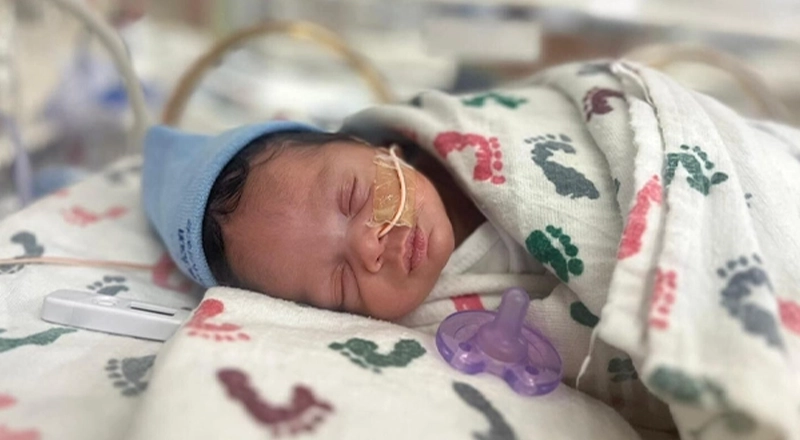
Samuel Gerdes was born healthy, answering all of Blanchard’s prayers.
While in the NICU, Samuel never required oxygen and took to bottle feeding quickly with donor milk, allowing him to gain weight and reach his milestones. Blanchard spent every available moment by his side.
Two months later, Samuel was discharged, finally going home to be surrounded by his family.
“Throughout this journey, I have experienced the best and worst of the healthcare industry,” Blanchard said. “Thank you to every doctor who answered my questions, celebrated every day with me, learned my son’s name, and embodied God’s love.”
Matthew Nuñez
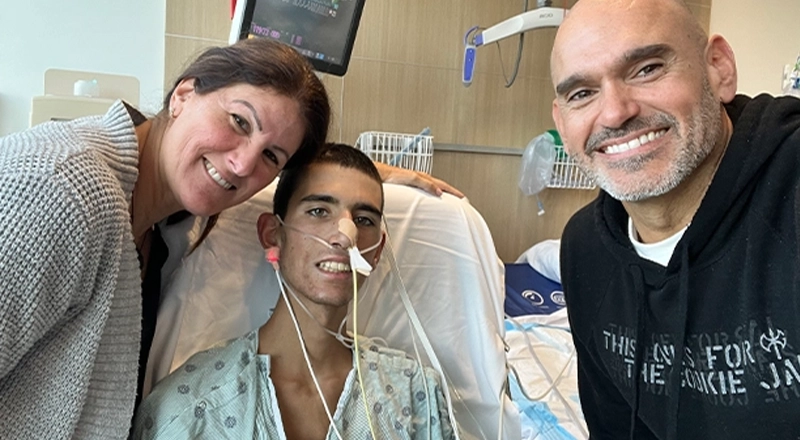
Matthew Nuñez had spent years running, following in his older brother’s footsteps as a track and cross-country athlete at Christopher Columbus Senior High School. As his senior year approached, he was preparing for collegiate competition, supported by his family and teammates.
But on September 27, 2024, everything changed. Less than half a mile into a race, Matthew felt a sudden, sharp pain on the right side of his head, spreading to his jaw. The pain became unbearable, forcing him to stop and walk toward the race paramedics. At first, they suspected dehydration, but something was clearly wrong.
Matthew’s mother, Anna, waited for him at the two-mile mark, but he never arrived. Soon, calls started coming in: “Something happened. Get to the finish line.”
He was rushed to Ryder Trauma Center at Jackson South, where Antonio Marttos, MD, a UHealth – University of Miami Health System trauma surgeon at Ryder Trauma and his team worked to stabilize him. Matthew was in critical condition, unable to move his right side. As he underwent a CT scan, his heart and lungs began to fail. Doctors acted quickly, intubating him and administering life-saving medication. When the scan was completed, the diagnosis was devastating—a massive brain bleed, which caused him to go into multi-organ failure.
As Anna prayed in the hospital chapel, surgeons performed emergency neurosurgery to relieve the pressure on Matthew’s brain. Once stabilized, he was airlifted to Jackson Memorial Hospital, where neurosurgeons discovered a vascular lesion in his brainstem. On October 4, Adib Abla, MD, chief of cranial neurosurgery at Jackson Memorial and his team successfully removed it.
After 26 days in intensive care and 11 days in rehabilitation, Matthew made a miraculous recovery. Today, he is back to running, finishing his senior year, and looking ahead to college.
“To the team at Jackson—there are no words. They saved my life,” he said.
Brianna Denny
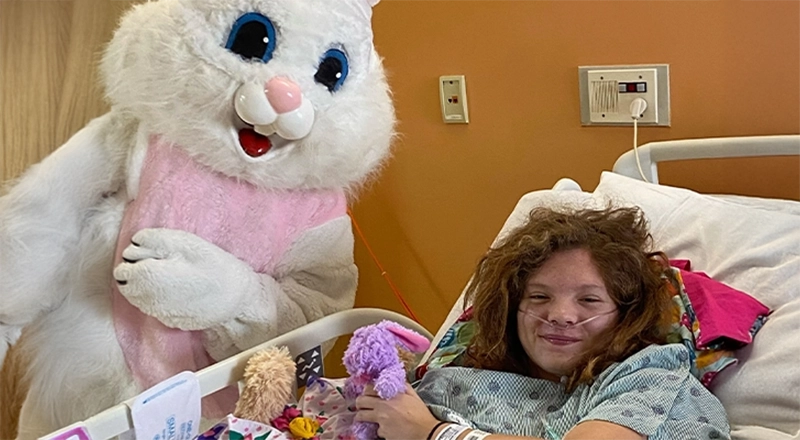
When Brianna Denny was 11 years old, she was diagnosed with a blood factor deficiency, a rare bleeding disorder where clotting proteins in the blood are missing, low, or don’t work well. Until this point, she was a normal, healthy kid who enjoyed softball, spending time with her friends and family, and going to school.
In February, Brianna, now 15, broke out in a rash on her feet. When it began to spread to her legs and became painful to the touch, she and her family knew something was wrong. A visit to a local children’s hospital led her to a rheumatologist, who began running tests to identify the cause of the rash.
About a month later, the rash returned and went further up Brianna’s leg. A hematologist recommended she be transported to Holtz Children’s Hospital.
While at Holtz Children’s, it was discovered that Brianna had autoimmune hepatitis, a rare, chronic liver disease that occurs when the body’s immune system attacks the liver, and hepatopulmonary syndrome, a rare lung complication connected to liver disease. Due to these conditions, she was experiencing stage three cirrhosis of the liver, a condition that can only be treated with a liver transplant.
Brianna was immediately placed under the care of the pediatric transplant team at the Miami Transplant Institute (MTI), which included Gennaro Selvaggi, MD, transplant surgeon.
Brianna was listed for a transplant on April 17, and just seven days later, received the call that a liver had been found. On April 25, Dr. Selvaggi and his team transplanted Brianna and gave her a second chance at life.
“Thank you to the team of doctors, nurses, and everyone at the hospital who took care of me,” Brianna said. “My mom gave me the strength to get through this, and so did my friends, who reached out every day.”